
Understand how colors in decor can change people’s moods and provide different sensations
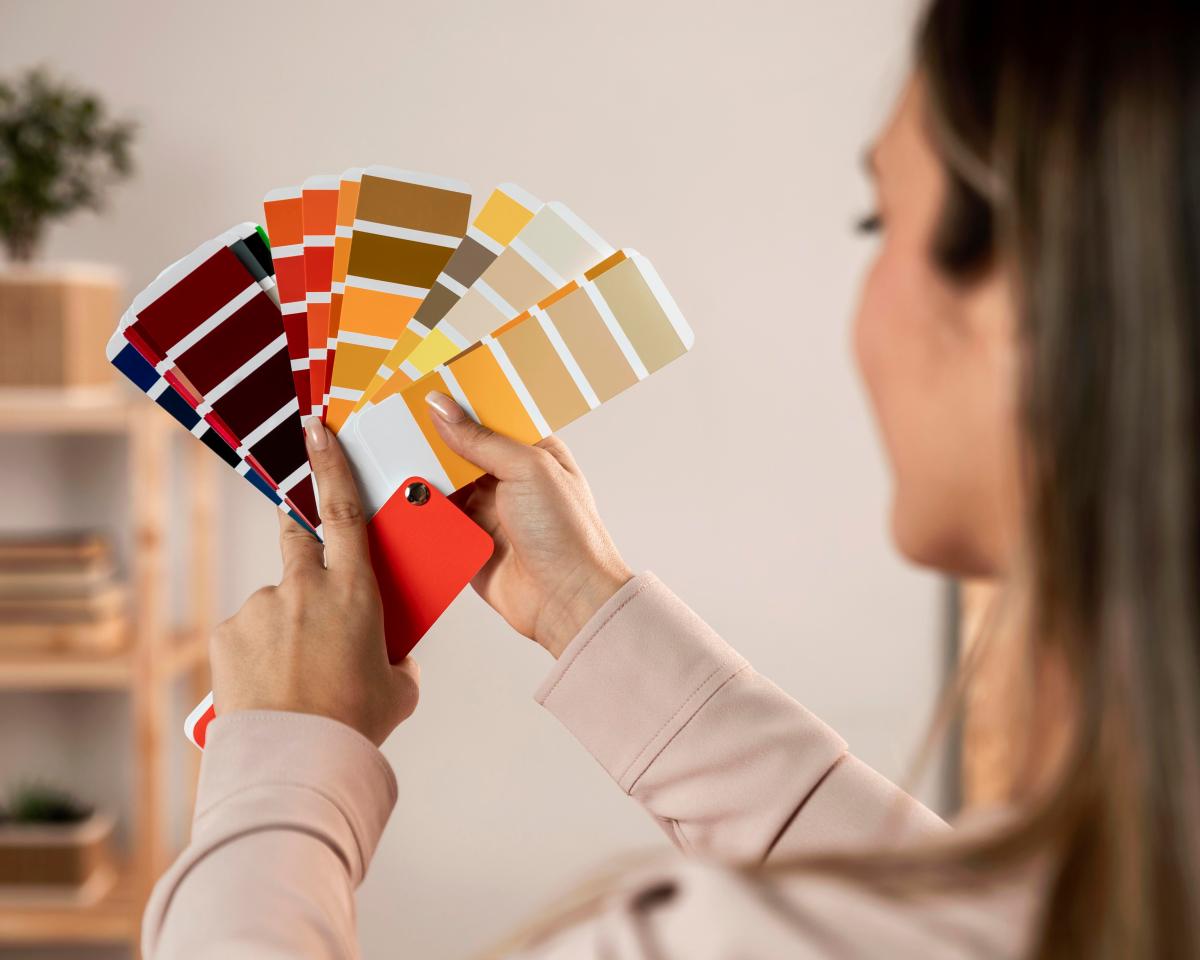
Colors can transform spaces, people's mood, perceptions about certain things and objects and even influence the temperatures of environments.
Therefore, the decoration color palette is a powerful tool.
Understanding the effects and stimuli of each color, it is possible to visually change dimensions and shapes, highlight details and even disguise imperfections.
All this because different nuances influence human beings and their behaviors in different ways..
To learn how to apply colors to the decor and offer the desired sensations, interior design takes advantage of color psychology.
This area of study explores how different tones act in the brain and what emotions they awaken..
Thus, for each environment and component, There may be an ideal color to be applied in the decoration, depending on the mood or sensation desired in each space.
Colors in Decoration Influence Psychology?
Colors are capable of transmitting messages. Soon, They act in various ways on the psychological, causing effects and stimuli.
Each shade stimulates a different part of the brain, being able to rescue memories or even instigate desires.
Therefore, there are color palettes in the decoration that provide a greater feeling of space, others that give energy and some capable of relaxing or bringing melancholic feelings.
All of this impacts the well-being of people who occupy environments and are in contact with colors..
Bright and bright environments, for example, make a space appear larger. The dark and earthy ones are more cozy and intimate.
But all this is not just about the color in the chosen decor..
The relationship between colors and the brain and its emotional results is subjective and varies from person to person., culture to culture and influences around.
Beyond individual insights, colors are seen and perceived based on beliefs, social contexts, cultural and biological.
If a color, like violet, for example, is related to the mystical world in a certain location, people influenced by this context will already have a prior perception and certain feelings related to it.
This is explained by color psychology.
The Psychology of Colors
Studies on the psychological effects of colors began hundreds of years ago.
It is believed that Aristotle made the first observations on the subject when he defined color as a property of objects.
After, in the 17th century, Isaac Newton contributed to studies, discovering that the prism breaks down into seven colors.
Already in the 19th century, German theorist Johann Goethe launched The Theory of Colors, in which he explored the effects of tones on the human brain.
The conclusion of the research is that the color, that is nothing more than light, It is a sensation generated by the human eye.
In other words, the different wavelengths of visible light are captured by the eyes and interpreted by the brain.
Sign up to receive Decor News first!
A luz, then, is also essential in this context. Depending on the brightness of a space, surfaces can be perceived in different ways.
The purity and vivacity of a color can also influence the sensations it will cause., explain professionals trained in faculty of psychology. The softest ones can give peace of mind, while the most vibrant, energy.
Therefore, by understanding color psychology, it is possible to create environments that are not only aesthetically pleasing, but also functional.
The study area also considers personal experiences and the socio-environmental and cultural context.
The red, for example, is commonly associated with passion and desire, and, in the same way, other colors also have this “meaning” linked to them..
- Red: the color of love and heart can cause greater energy effects. It has a meaning of union and interaction. At the same time, what an intense shade looks like, can be stimulating and have an impact on mood.
- Yellow: is associated with happiness and creativity. It can give the feeling of more space and, because it is the color of the sun, of energy. On the other hand, can be associated with melancholic and depressive episodes.
- Green: present in nature, The color green gives a feeling of rest and tranquility, That's why it's associated with health. Through the relationship with plants, can reduce stress and provide relaxation.
- Orange: It is also a color of energy and strength, stimulating physical activities and disposition.
- blue: related to water and large dimensions, The color conveys a feeling of calm and relaxation. However, due to the grandeur, can be associated with loneliness and sadness.
What Colors Are Recommended for Each Room?
As explained, the color palette of the decoration needs to be suited to people’s needs, taking into account individual perceptions, memories and the context in which they are inserted.
With this, it is possible to create aesthetically pleasing and functional environments, that meet the demands of each space.
The first step, then, is to understand what function each room should have and what feeling you want to feel in that place.
In living spaces, such as living and dining rooms, games and leisure rooms, warm, vibrant colors are recommended, for offering a sense of unity, interaction and reception.
Red and orange, for example, are ideal and can appear on furniture or decorative objects. These colors, that refer to energy, can also be applied in places where physical exercise is practiced.
For rest spaces, like the bedrooms or the living room, may have shades of blue and green. The feeling of relaxation will be greater and the brain will not receive as much stimulus of desire and action.
The brightness and tones of lights also influence environments.
Excessive white light makes the room bigger and wider. Now the yellow light, or low, It's more welcoming and intimate.
Text prepared by the Conversion team.